The Final Chapter in the Rogano Case: Supreme Court clarifies Scots law on recovery of third-party losses
Hugo Duffin is a solicitor in the Dispute Resolution team at Davidson Chalmers Stewart which has joined forces with WJM creating a combined firm with more than 200 colleagues operating across Scotland.
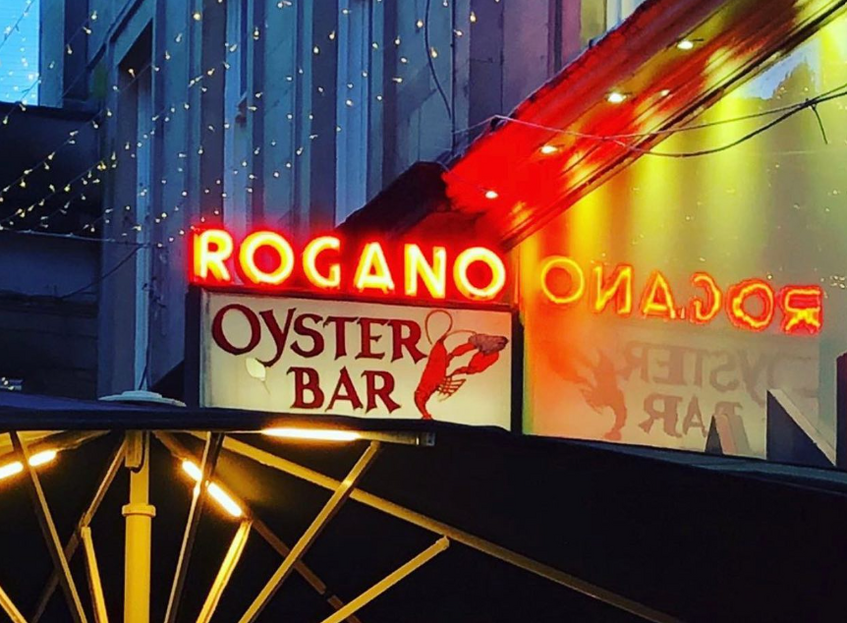
Below he discusses a dispute that surrounded Rogano, a familiar and much loved name to generations of Glaswegians. Its iconic status thrust the dispute into the public eye and the decision reached recently by the Supreme Court has provided much needed clarity on an important area of Scots law.
Earlier this year, the UK Supreme Court sat in Glasgow – its first visit to the city and only its second time in Scotland – having sat in Edinburgh in 2017. One of the appeals being heard was Forthwell Limited v Pontegadea UK Limited, better known as the "Rogano case". The dispute attracted considerable interest, not only because it concerned one of Glasgow's most iconic restaurants, but because it raised an important question of contract law.
The Supreme Court has now issued its judgment.
The background
A dispute arose following flooding and fire damage at the Rogano premises between December 2020 and January 2021. The restaurant subsequently remained closed while the parties disagreed about liability for the repairs required to make the building fit for trading again.
While Forthwell Limited held the lease of the premises, the restaurant business itself was operated by its wholly owned subsidiary, Lynnet Leisure (Rogano) Ltd, under a licence to occupy. Forthwell claimed its landlord, Pontegadea UK Limited, had failed to fulfil its repairing obligations under the lease. It argued that this prevented the restaurant from reopening and caused significant financial losses.
The legal issue
The difficulty for Forthwell was that the losses were said by Pontegadea to have been suffered by Lynnet rather than by Forthwell itself. That raised the central question in the appeal:
Can a party recover damages for losses that were suffered by a related company?
This is referred to as "transferred loss". It is a practical issue that arises in modern business structures where one company owns or leases assets and another carries on the trading activity.
The issue was of particular interest to commercial lawyers because it gave the Supreme Court an opportunity to clarify a particular legal issue about transferred loss in Scotland where the courts had arguably taken a broader approach to transferred loss than the position adopted elsewhere in the UK.
The losses therefore fell into a "legal black hole". Forthwell had the contractual right to sue but had not suffered the trading losses. Lynnet had suffered the losses but was not a party to the lease, and therefore had no direct contractual claim against the landlord.
Forthwell argued that Scots law should allow recovery of Lynnet's losses and account to Lynnet for any damages awarded. It relied on comments made by Lord Clyde in Panatown and on subsequent Scottish decisions which appeared to support the suggestion that, where a breach of contract causes loss to a closely connected third party, the contracting party may be entitled to pursue that loss on the third party's behalf.
The Supreme Court was therefore asked to determine whether Scots law recognises such a broad exception to the general rule that a party can only recover damages for losses it has itself suffered – or whether the principle of separate corporate personality should prevail.
The Decision
Delivering the unanimous judgment of the Court, Lord Doherty dismissed the appeal and held that Forthwell could not recover Lynnet's losses. The Court reaffirmed the general rule that a party to a contract can recover only losses which it has itself suffered, and a company cannot recover losses suffered by another company merely because the two form part of the same corporate group.
Forthwell had argued that Scots law should recognise a broader transferred loss principle, allowing a contracting party to recover losses suffered by a closely connected third party and account to that third party for any damages recovered.
The Supreme Court rejected that argument. It found that Lord Clyde's analysis in Panatown had never been endorsed by the majority of the House of Lords and did not form part of the law of either Scotland, or England and Wales. The Court considered that recognising such a broad exception would create uncertainty and could expose parties to liabilities that were never contemplated when a contract was entered into.
The Court was also concerned that the proposed exception lacked any clear boundaries. While Forthwell suggested that the principle should apply where a third party had a "material interest" in the contract, the Court was not persuaded that this would provide a sufficiently clear or workable test.
Importantly, the Court was not persuaded that the possibility of a "legal black hole" justified creating such a wide-ranging exception. While acknowledging that difficult cases can arise where the party suffering the loss is not the party with the contractual right to sue, the Court held that those circumstances did not warrant departing from established principles of contract law.
Perhaps most significantly, the Court emphasised that Forthwell and Lynnet had deliberately chosen to structure their affairs through separate corporate entities. Having done so, they could not avoid the ordinary consequences of separate corporate personality simply because the arrangement later proved inconvenient in the context of litigation. As Lord Doherty observed, there was nothing unjust about applying the usual rule in those circumstances.
The Court did not, however, close the door entirely on transferred loss claims. It confirmed that the long-established exception recognised in certain limited circumstances remains part of Scots law, but left open the question of whether any broader transferred loss principle may exist in other situations.
Why does it matter?
Although the case arose from a dispute concerning a well-known Glasgow restaurant, its significance extends much further.
Many businesses operate through corporate group structures. It is common for one company to hold a lease, own property or enter into contracts, while another carries out the day-to-day trading activities. The decision is a useful reminder that those distinctions can become critical when disputes arise.
The Supreme Court's judgment provides welcome clarity on the limits of transferred loss in Scots law and reinforces the importance of ensuring that contractual arrangements reflect the commercial realities of how a business operates.
For lawyers, the case is likely to become a leading authority on transferred loss. For businesses, it serves as a reminder that corporate structure is not merely an administrative exercise - it can have a real impact on the remedies available when things go wrong.
What began as a dispute about a famous Glasgow restaurant ultimately became one of the most significant recent decisions on transferred loss in Scots law, providing long-awaited clarity in an area that had remained uncertain for many years.
For advice on contract law contact Solicitor Hugo Duffin (Hugo.Duffin@dcslegal.com) or Partner Sarah Wardel (sarah.wardell@dcslegal.com)