Donor Conception: Looking at the big picture
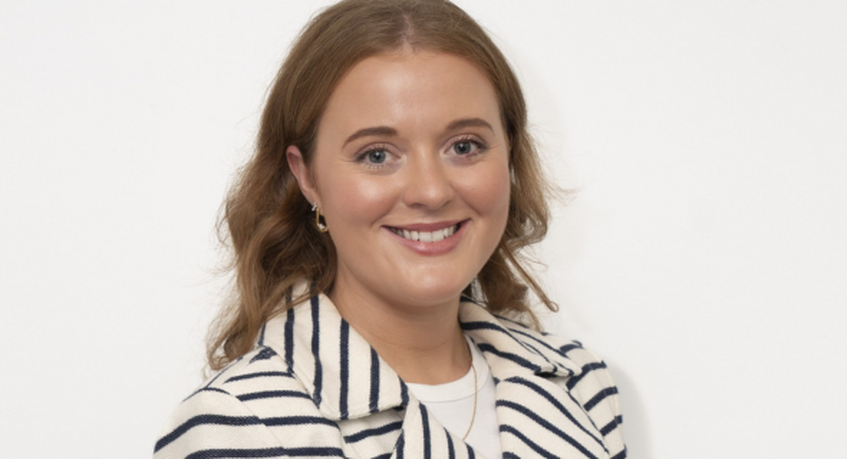
Family and child law solicitor Brittany Thomas, Senior Associate, explains why technical legal knowledge must be backed by an awareness of wider factors including medical processes, societal attitudes and questions around identity and family.
Attending the recent Donor Conception Network spring conference in London offered a powerful remainder that family law, particularly in the context of donor conception, cannot be practiced through a purely legal lens.
While the legal framework has evolved significantly in recent years, including changes in 2019 enabling single people to obtain parental orders, the conference made clear that is only one part of a much broader landscape that lawyers need to keep in mind. Medical developments are deeply personal, emotional experiences and continue to shape how families are formed, understood and supported.
A striking illustration of this came from a parental panel featuring two solo parents who had used either a donor egg or donor sperm. Their experiences highlighted the gap between the legal permission to start a family and the lived reality. Because, while legal routes to parenthood exist, it’s not always straightforward. These are not simply legal issues, but deeply personal experiences which shape the path to parenthood in ways legislation alone simply cannot.
On the panel was a mother (Anita) who described being discouraged from adoption – she discussed informal comments about ethnic matches and eligibility, as well as international legal barriers that ultimately prevented her from pursuing going down the adoption route.
The panel also included a father (David) who was one of the first single men in the UK to pursue parenthood in this way once the law allowed it. His experience similarly exposed the persistence of societal assumptions. He spoke about being questioned on why he did not adopt, and the implication of choosing to have a biological child as a single man was somehow seen by others as inappropriate. Even in everyday life he encountered assumptions about his competence as a father, with others expecting a maternal figure to be present – be that a wife or mother.
These attitudes form part of the environment on which legal advice is received and acted upon and simply cannot be ignored.
What was particularly striking across both accounts was the emphasis on openness. Both parents described talking to their children about donor conception from an early age – not because the child immediately understood what was being said, but normalised their telling of the narrative. Whether through practising conversations, or celebrating a donor day, these approaches reflect an awareness that the emotional dimension of donor conception requires active and ongoing engagement with the child.
A second session, focussing on sharing family stories, offered a different perspective from a mother whose daughter was conceived through egg donation in 2004. Importantly, this was prior to the removal of donor anonymity. Her experience highlighted how legal and medical frameworks evolve over time and how families continue to navigate those changes years later. Initially, the panel member described herself as an “under-sharer”, choosing to tell very few people about her daughter’s conception and that a donor egg that was used. Over time, however, her approach shifted. What she had once built up as a daunting conversation became, in reality, far more straightforward. Her daughter showed little initial interest, and when questions were raised later, they formed part of a natural process of understanding, rather than a source of difficulty or upset.
Perhaps most strikingly, when her daughter eventually connected with the woman who had provided the donor egg through commercial DNA testing, the experience was overwhelmingly positive. While there was a brief moment of discomfort upon seeing the word “mother” used in a genetic context, this did not translate into any sense of threat. Instead, it reinforced a key point – parentage is about far more than genetics. As she reflected, there is a lot more to parentage than “where the egg comes from”.
This theme was further developed in a research session led by Dr Leah Gilman, who explored how social and technological changes are reshaping donor conception. The introduction of identity-release legislation in 2005 created a new legal context, but developments such as commercial DNA testing and online donor matching platforms have gone far beyond what legislation alone could have anticipated. Parents are now navigating an increasingly complex landscape in which information about donors and genetic relatives may become available earlier (i.e. before the child turns 18), and in ways that are difficult to control.
As Dr Gilman’s research highlighted, this creates both opportunities and challenges. On one hand, greater access to information can support openness and help avoid unrealistic expectations. On the other hand, it raises difficult questions about how and when to share information, as well as difficulties in relation to how to manage unexpected discoveries and how to balance the needs of different children within the same family.
What emerged from the session was the level of responsibility (and often anxiety) that parents feel in this situation feel while trying to “get it right”. Decisions about whether to pursue donation, engage with DNA testing or facilitate contact with donor relatives are rarely straightforward. They are shaped not only by legal considerations, but also by personal values, financial constraints, relationship dynamics and wider societal expectations.
For us lawyers working this area, there are a number of implications. Technical legal knowledge, while essential, is not sufficient on its own. Clients are not making decisions in a vacuum. They are navigating medical processes, societal attitudes and deeply personal questions about identity and what they deem to be a family. Legal advice that fails to take account of these factors risks missing the reality of the client’s situation – and potentially not being able to support them appropriately.
This does not mean that lawyers must become medical experts, or indeed even counsellors. However, it does require a level of awareness and sensitivity to the broader context in which donor conception takes place. Understanding the practical realities of fertility treatment, the impact of evolving technologies, and the emotional dimensions of family formation enables more informed, empathetic, and ultimately, more effective advice.
Donor conception law is about people – the families, their identities and their futures. The conference served as a reminder that to support clients properly in this space, lawyers must engage not only with the law itself, but with the human experiences that sit behind it.
If you or anybody in your family is looking for advice in relation to this topic, then please do get in touch with me at bgt@wjm.co.uk and I would be happy to help.
The information contained in this newsletter is for general guidance only and represents our understanding of relevant law and practice as at April 2026. Wright, Johnston & Mackenzie LLP cannot be held responsible for any action taken or not taken in reliance upon the contents. Specific advice should be taken on any individual matter. Transmissions to or from our email system and calls to or from our offices may be monitored and/or recorded for regulatory purposes. Authorised and regulated by the Financial Conduct Authority. Registered office: 319 St Vincent Street, Glasgow, G2 5RZ. A limited liability partnership registered in Scotland, number SO 300336.